Latest News
-
 PR LG Display joins VALORANT Esports EMEA as Official Partner2026-11-24 See details
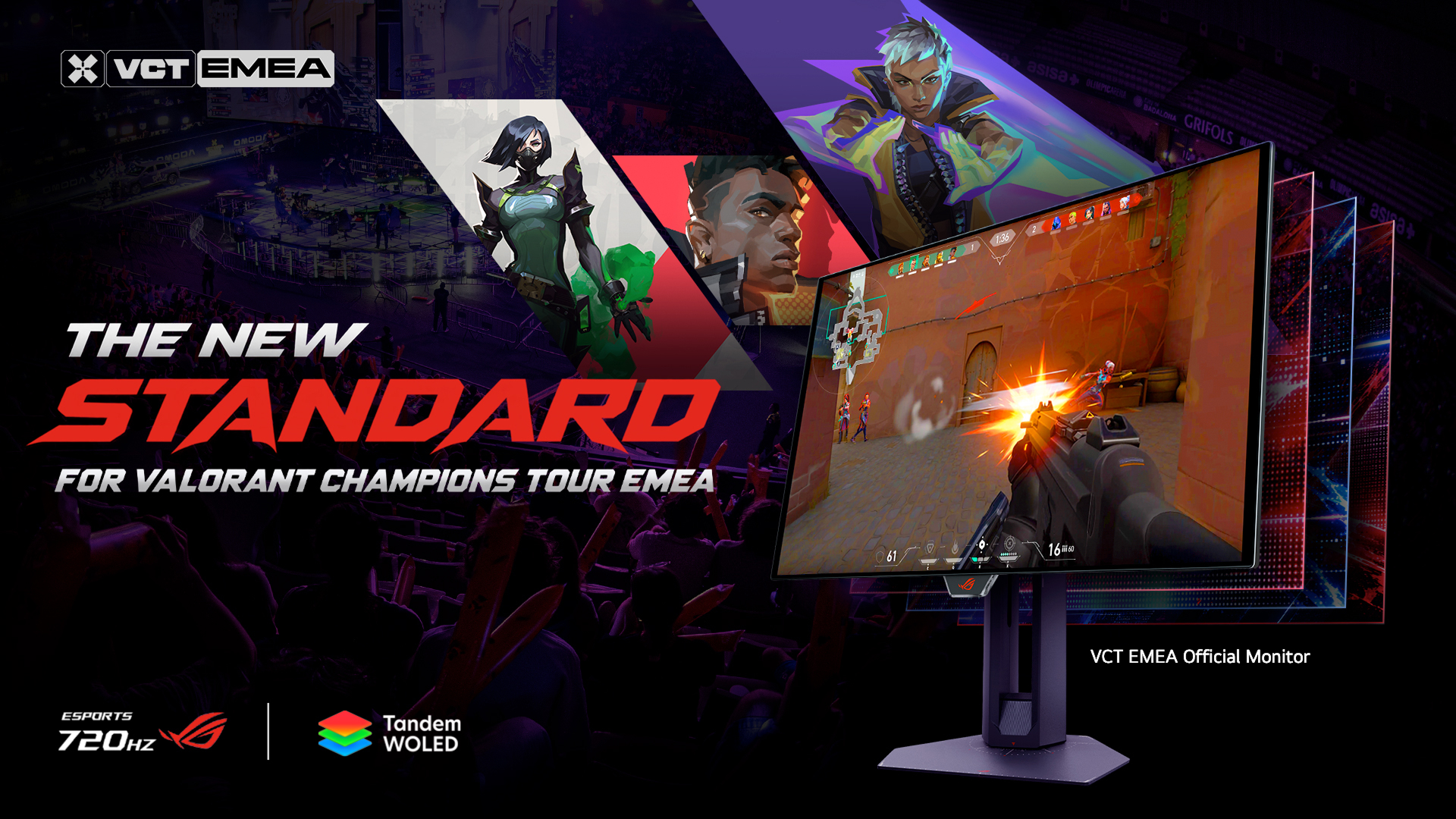
SEOUL, Korea (Nov. 24, 2026) – LG Display, the world’s leading innovator of display technologies, announced today it is joining VALORANT Esports EMEA as an Official Partner for the 2027 season.
VCT EMEA and Game Changers EMEA represent the pinnacle of VALORANT esports across Europe, the Middle East, and Africa, uniting a vast territory where elite tactical masterminds and decorated champions clash on the stage. Players competing across VCT EMEA and Game Changers EMEA will use LG Display’s newly launched 24.5-inch FHD 720Hz Tandem WOLED panel, which is the fastest Tandem WOLED panel tailored specifically for esports. The panel is featured in ASUS’s ROG Swift OLED PG259QWS Ace gaming monitor.
By using this 24.5-inch FHD panel, professional gamers get to benefit from the world’s highest refresh rate (720Hz) among gaming OLED displays, as well as the fastest response time (0.02ms). As a result, it supports the ultimate gameplay experience in fast-paced, first-person shooter titles such as VALORANT.
For professional VALORANT players, every fraction of a second matters. From identifying an opponent in an instant to reacting to plays quickly, players rely on display performance to succeed when pressure is at its highest.
By harnessing self-emissive pixels, LG Display’s Tandem WOLED technology also offers highly vivid picture quality, maximizing player immersion.
“We are excited to partner with LG Display for the upcoming season and have their powerful technology used on stage at the Berlin arena, and when we take the competition on the road to Warsaw and Istanbul,” said Charlie Allen, EMEA Director, Commercial Partnerships & Business Development of Riot Games. “VALORANT players need certain qualities from their monitors to perform at their best: fast response times, high-quality display performance and, of course, clear visibility when competing under the bright lights of an arena. This partnership will ensure the players can always compete at their fullest potential,” he added.
“We are delighted with this opportunity to showcase the advantages of our panel, which is the world’s fastest Tandem WOLED display tailored specifically for esports. By providing exceptional clarity and smoothness, it can clearly capture even fast-paced moments such as the flash of a gun muzzle, making it a highly immersive window into the world of gaming,” said Hyeon-woo Lee, Head of the Medium and Large Display Business Unit at LG Display.
-
 PR LG Display Reports Third Quarter 2026 Results2026-10-22 See details
SEOUL, Korea (Oct. 22, 2026) – LG Display today reported unaudited earnings results based on consolidated K-IFRS (International Financial Reporting Standards) for the three-month period ending September 30, 2026.
- Revenues in the third quarter of 2026 increased by 12% to KRW 6,277 billion from KRW 5,612 billion in the second quarter of 2026 and decreased by 10% from KRW 6,957 billion in the third quarter of 2025.
- Operating profit in the third quarter of 2026 was KRW 250.6 billion compared with the operating loss of KRW 107.7 billion in the second quarter of 2026 and with the operating profit of KRW 431 billion in the third quarter of 2025.
- EBITDA in the third quarter of 2026 was KRW 1,214 billion, compared with EBITDA of KRW 872 billion in the second quarter of 2026 and KRW 1,424 billion in the third quarter of 2025.
- Net profit in the third quarter of 2026 was KRW 756 billion, compared with the net loss of KRW 419 billion in the second quarter of 2026 and with the net profit of KRW 1.3 billion in the third quarter of 2025.
LG Display recorded KRW 6.28 trillion in revenues and KRW 250.6 billion in operating profit in the third quarter of 2026.
Revenues increased by 12% quarter-on-quarter, driven by higher shipments of large-sized and mobile OLED products during the peak season. Revenues decreased by 10% year-on-year, reflecting lower shipments of mid-sized LCD products as part of the company's profitability-focused product portfolio strategy.
Operating profit improved quarter-on-quarter despite external factors such as a decline in the KRW/USD exchange rate and rising semiconductor costs, driven by continued efforts to increase the proportion of high value-added OLED products and enhance operational efficiency.
Net profit improved by more than KRW 1 trillion to KRW 755.6 billion, partly due to improved financial gains and losses resulting from exchange-rate fluctuations. EBITDA reached KRW 1,214 billion, representing an EBITDA margin of 19.3%.
LG Display will continue advancing its OLED-centered business portfolio while further strengthening its stable and sustainable profit structure through differentiated technology leadership and technology-driven cost innovation.
In its small- and mid-sized business, the company will strengthen the competitiveness of high-end products by leveraging its differentiated technology leadership and stable development and production capabilities. In the mobile sector, it will solidify its market position through technological competitiveness and reliable supply. In the IT sector, it will focus on improving profitability by emphasizing high value-added products and enhancing cost competitiveness.
In its large-sized business, LG Display aims to lead the premium market by leveraging its proprietary OLED technologies and product competitiveness. For OLED TV panels, the company will strengthen its premium product lineup while meeting diverse customer needs with competitively priced products. Regarding OLED monitor panels, it will expand its market presence by strengthening its Gaming OLED product lineup featuring proprietary technologies.
Meanwhile, LG Display is focusing on developing best-in-class technologies that competitors cannot easily replicate to secure future growth drivers. The company continues to pursue technology innovation, including its recent development of FLiPP, a next-generation OLED patterning technology. Going forward, it will further enhance its technological competitiveness through proprietary technologies and accumulated expertise, with a focus on translating these advances into tangible business results.
“Despite continued uncertainty in the external business environment, including exchange-rate and component-price fluctuations, we focused on strengthening our business competitiveness and improving operational efficiency in the third quarter,” said Sung-hyun Kim, CFO of LG Display. “We will continue to secure differentiated technological advantages and advance cost innovation to enhance our ability to respond to changes in the external environment and further strengthen our foundation for stable profitability.”
-
 PR LG Display launches 24.5-inch 720Hz Gaming OLED Panel2026-09-21 See details
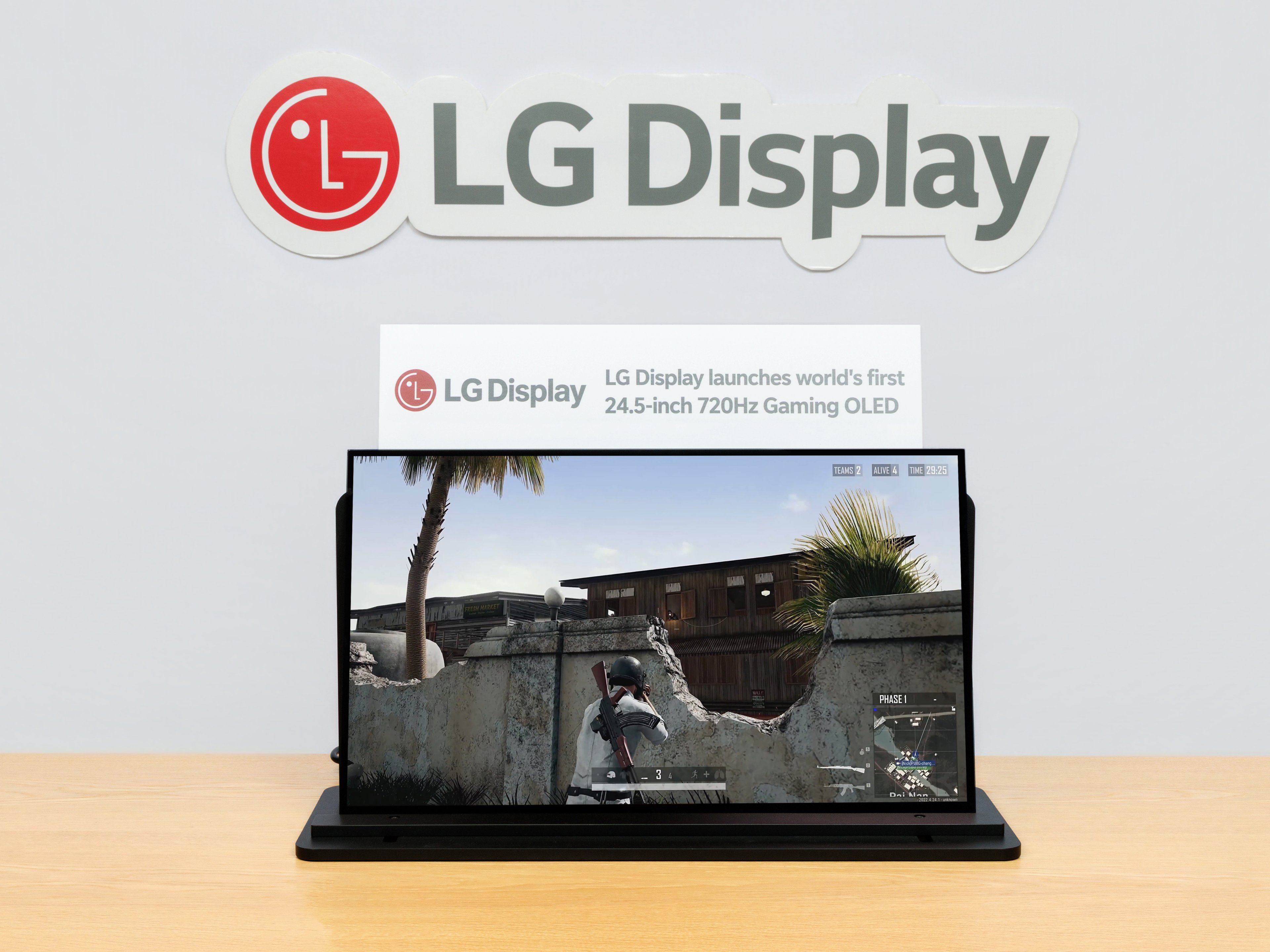
SEOUL, Korea (September 21, 2026) – LG Display, the world’s leading innovator of display technologies, announced today its launch of a 24.5-inch 720Hz Gaming OLED panel, leading the esports monitor market paradigm.
The company's 24.5-inch 720Hz Gaming OLED panel is the first-ever OLED panel tailored specifically for esports.
Standard monitors used for esports are primarily in the 24-inch class, enabling players to view the entire screen at a glance.
By initiating mass production of its 24.5-inch 720Hz Gaming OLED panel, LG Display aims to pioneer the mainstreaming of OLED technology across the esports monitor market.
The panel realizes the world’s highest refresh rate (720Hz) among gaming OLED displays as well as the fastest response time (0.02ms). Refresh rate refers to the number of times per second a screen updates, so 720Hz means the screen refreshes 720 times per second. The core technology lies in a stable driving algorithm, going beyond simply displaying scenes.
LG Display developed a proprietary algorithm to stably drive the 720Hz refresh rate even at FHD (1920x1080) resolution, applying an integrated solution spanning from panel design to the driving system.
Through this ultra-high refresh rate and lightning-fast response time, motion blur and ghosting are dramatically reduced, delivering an overwhelming user experience in fast-paced genres such as first-person shooter (FPS) and racing games. For example, the panel provides exceptional clarity and smoothness, clearly capturing the flash of a gun muzzle or the speed of a vehicle hurtling around a track.
Furthermore, unlike LCDs that require a backlight, each pixel emits light independently to achieve highly vivid picture quality, maximizing player immersion.
The panel has first been applied to global monitor manufacturer ASUS's new gaming monitor, the ROG Swift OLED PG259QWS Ace. This monitor has been selected as the official esports monitor for PGL CS2 Major Singapore 2026, one of the biggest tournaments in the Counter-Strike 2 calendar.
With the launch of its 24.5-inch 720Hz Gaming OLED panel, LG Display plans to accelerate its strategy to target the esports market. The company intends to lead the gaming display market based on its full lineup ranging from the 20-inch to the 40-inch class, with some products featuring its proprietary Dynamic Frequency & Resolution (DFR) technology. To further widen the gap with followers, LG Display is accelerating AI transformation (AX) across all areas of gaming display development.
“As a technology-driven company, we will lead the transition to OLED in the gaming monitor market and lead the mainstreaming of OLED in the global market,” said Hyeon-woo Lee, Head of the Large Display Business Unit at LG Display.
-
 PR LG Display unveils FLiPP, achieving dream next-generation OLED technology2026-08-19 See details
SEOUL, Korea (August 19, 2026) – LG Display, the world’s leading innovator of display technologies, announced today that it has successfully developed a dream OLED patterning method that is free from the conventional fine metal mask (FMM) process, using its own proprietary technology. Its groundbreaking FMM-less method delivers much greater flexibility in mass production as well as brighter panels with longer lifespan and lower power consumption.
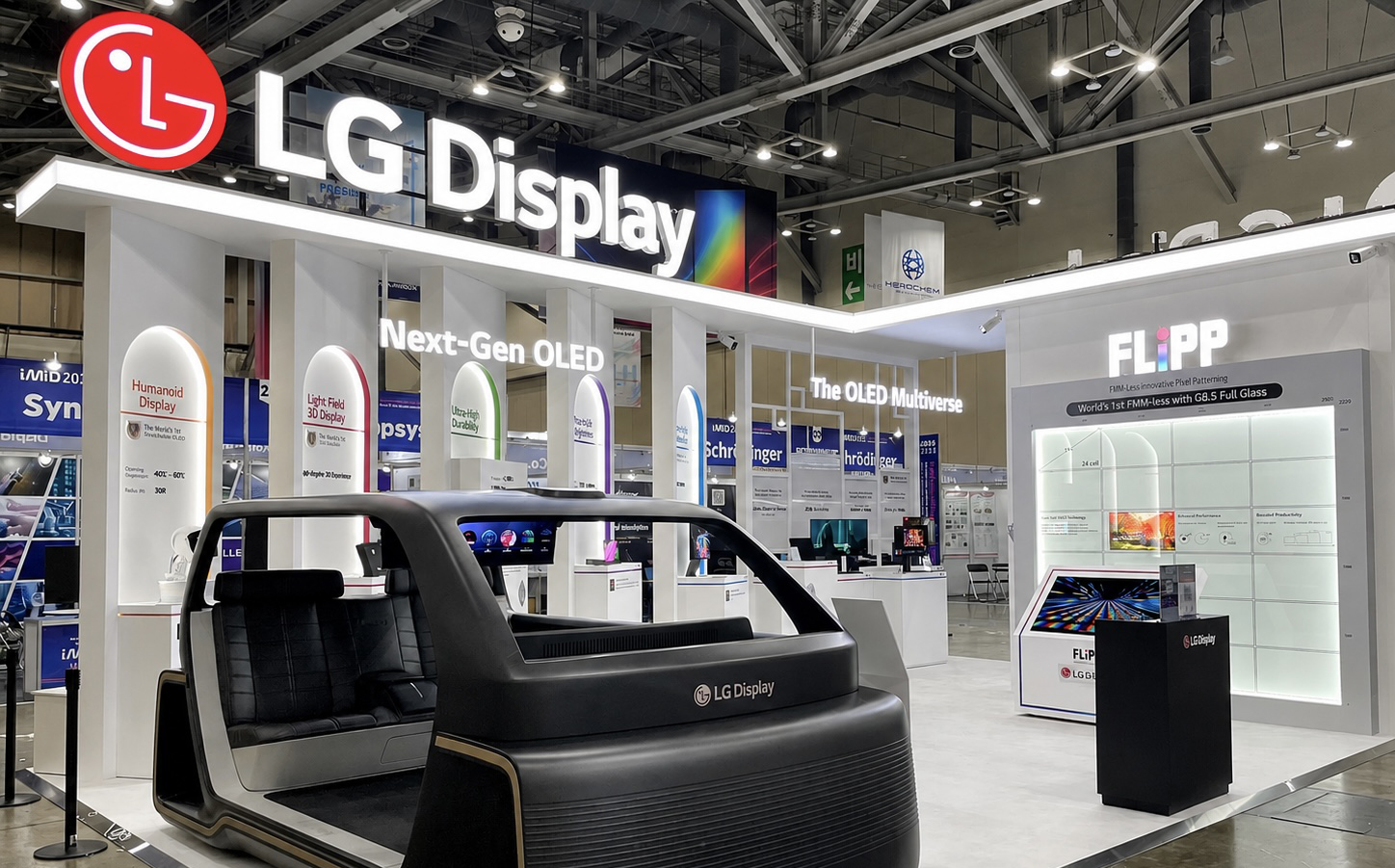
The company will unveil FLiPP (FMM-Less innovative Pixel Patterning) for the first time in the world at the International Meeting on Information Display (IMID) 2026 in Busan, where LG Display will host a dedicated exhibition hall for three days from Aug. 19.
Compared with panels produced using FMMs under identical conditions, FLiPP enables displays to increase brightness by 1.6 times, extend lifespan by 2.4 times, and reduce power consumption by 13%. This is because FLiPP improves the aperture ratio — the proportion of the total display area occupied by RGB pixels — by approximately 55%.
The FMM method adds to manufacturing costs as expensive new FMMs must be produced whenever the panel size or resolution changes. In addition, due to the inherent properties of metal, large masks tend to sag in the center under their own weight, causing misalignment and sometimes resulting in color-mixing defects.
FLiPP eliminates the disadvantages associated with the metal plates used in the FMM process that has been the mainstream OLED manufacturing method for over a decade. The FMM process requires large mother glass substrates, such as 8.6th-generation or other 8th-generation (2,200 × 2,500 mm) substrates, to be divided and processed as half-cut substrates due to the limited size of FMM sticks.
After a year of concentrated R&D, LG Display came up with FLiPP as a new OLED manufacturing paradigm. Unlike the FMM method, which may be compared to a stencil art technique where red, green, and blue (RGB) organic materials are evaporated through tiny holes in metal plates, FLiPP coats RGB pixels in order, secures them in precise positions, and incorporates photolithography — employing precision UV light etching to erase unnecessary areas during OLED pixel patterning.
Leveraging its existing large-sized Tandem WOLED production infrastructure and technical expertise, FLiPP has allowed LG Display to become the first display company to manufacture FMM-less OLEDs using 8.5th-generation mother glass as a single whole piece. Compared to the production of OLED laptop panels of the same size made using FMMs or other FMM-less methods that require divided substrates, FLiPP delivers up to 64% higher mother glass utilization efficiency. As a result, less substrate material is wasted and FLiPP directly translates into higher productivity and lower manufacturing costs.
As the world’s only FMM-less manufacturing process for 8.5th-generation OLED panels, LG Display has filed trademark applications for FLiPP in Korea and key global markets.
The company is strengthening its OLED technology leadership by combining RGB OLED, widely regarded as the most advanced OLED technology available today, with FLiPP, its next-generation innovative manufacturing process, to maximize production flexibility and efficiency.
One of FLiPP’s greatest advantages is that it is free from panel size and resolution constraints. In theory, it can be used to produce displays ranging from 1 inch to 100 inches and can be applied not only to conventional panels but also to VR and AR displays, making it a virtually universal, “ultimate technology.”
Starting with IT applications such as tablets and monitors, it will expand its range of FLiPP-manufactured panels to cover a range of products from 1-inch wearable devices to ultra-large TVs — tailoring products to customer needs.
“We were able to successfully realize FLiPP, a next-generation OLED patterning technology referred to as a ‘dream technology,’ by bringing together our proprietary WOLED technologies and know-how," said Choi Young-seok, CTO at LG Display. "Through our participation in IMID, we will lead next-generation OLED technologies and accelerate market differentiation.”
Meanwhile, LG Display’s next-generation OLED TV panel driving technology, Hyper Double Scanning (HDS), has been recognized for its technological excellence by winning the IMID “Display of the Year Award.” The award is presented to the most outstanding product among those commercialized each year. LG Display is currently mass-producing its entire lineup of OLED TV panels with HDS and plans to continue leading the global premium TV panel market.
-
 PR LG Display Reports Second Quarter 2026 Results2026-07-22 See details
SEOUL, Korea (Jul. 22, 2026) – LG Display today reported unaudited earnings results based on consolidated K-IFRS (International Financial Reporting Standards) for the three-month period ending June 30, 2026.
- Revenues in the second quarter of 2026 increased by 1% to KRW 5,612 billion from KRW 5,534 billion in the first quarter of 2026 and rose 0.5% compared to KRW 5,587 billion in the second quarter of 2025.
- Operating loss in the second quarter of 2026 was KRW 108 billion, compared to the operating profit of KRW 147 billion in the first quarter of 2026 and with the operating loss of KRW 116 billion in the second quarter of 2025.
- EBITDA in the second quarter of 2026 was KRW 872 billion, compared with EBITDA of KRW 1,141 billion in the first quarter of 2026 and KRW 1,054 billion in the second quarter of 2025.
- Net loss in the second quarter of 2026 was KRW 419 billion, compared to the net loss of KRW 576 billion in the first quarter of 2026 and with the net profit of KRW 891 billion in the second quarter of 2025.
LG Display announced today that it continued its profitability in the first half of 2026, maintaining the company’s positive earnings momentum. It recorded cumulative revenues of KRW 11.15 trillion and an operating profit of KRW 39 billion on a consolidated basis for the first half of 2026, returning to profitability compared to the same period last year, when it posted revenues of KRW 11.65 trillion and an operating loss of KRW 82.6 billion.
For the second quarter of 2026, the company recorded revenues of KRW 5.61 trillion and an operating loss of KRW 107.7 billion.
The first half is traditionally a slower season for the display industry, as set manufacturers adjust component inventories ahead of new product launches in the second half of the year. In addition, the second quarter reflected one-off expenses associated with workforce efficiency measures.
Despite these factors, LG Display improved its first-half operating results by KRW 121.6 billion compared to the same period last year, successfully minimizing the impact of seasonal demand weakness and one-time costs. The performance reflects tangible progress in advancing its OLED-centered business portfolio based on its technology leadership.
In the second half of the year, LG Display plans to further strengthen its business competitiveness by securing best-in-class technologies and advancing technology-driven cost innovation. In particular, beyond conventional cost reduction efforts, the company will maximize efficiency across the entire value chain – from development and manufacturing to production – through technology innovation centered on AI Transformation (AX). LG Display thus aims to fundamentally enhance its business structure and sustain growth by delivering differentiated customer value.
In its small and mid-sized business, the company will strengthen its competitiveness by focusing on high-end products built on its differentiated technological advantages. At the same time, it plans to respond flexibly to changing market conditions by maximizing its stable technology, development, and mass production capabilities.
In its large-sized business, LG Display will further expand its leadership in the premium market by leveraging a product lineup that combines differentiated technologies with cost competitiveness. As the monitor market continues to transition from LCD to OLED, the company plans to strengthen its portfolio of high value-added products, including Gaming OLED monitor panels, while expanding shipment volumes.
“Excluding one-time factors, our underlying business profitability stayed positive in the second quarter,” said Sung-hyun Kim, CFO of LG Display. “In the second half, we will continue improving our annual performance by advancing cost innovation and further strengthening our business competitiveness, while establishing a more stable and sustainable profit structure.”